
The results of the UK Familial Ovarian Cancer Screening Study (UK FOCSS) found that screening women at a high risk of ovarian cancer every four months may reduce the likelihood of being diagnosed with advanced stage ovarian cancer.
The results were published February 2017 in leading science journal, Clinical Oncology. The study was led by UCL and co-funded by The Eve Appeal alongside Cancer Research UK and the UK Departments of Health.
It remains uncertain whether detecting ovarian cancer by screening increases the chances of a woman surviving the disease. Yet, for women at high risk, the current medical advice is to have their ovaries and fallopian tubes removed after completing their families, but many women delay or decide against having surgery.
To screen for ovarian cancer the UK FOCSS study used a test called the Risk of Ovarian Cancer Algorithm (ROCA). They found that the ROCA test may be an option for these women at a high-risk until they decide to undergo surgery. The ROCA test looks for rising levels of a blood protein, CA125, which can be elevated in ovarian cancer.
Over 4,000 women with a 1 in 10 or greater risk of developing ovarian cancer in their lifetime from a family history of cancer or a BRCA gene alteration took part in the study. A large percentage of these cancers happen before the age of 50, but many women are keen to delay surgery until they have completed their families or had a natural menopause.
Over the three years of screening and in the year after their last test, 19 women were diagnosed with ovarian cancer before having any symptoms. The screening was estimated to be able to pick up 9 out of every 10 ovarian cancers. A further 18 women were diagnosed with ovarian cancer in the five-year period that followed. 17 (94%) of them had advanced stage cancer (IIIB-IV) compared to seven (37%) of the 19 diagnosed during the screening phase.
The screening appears to be very effective at detecting ovarian cancer before it causes symptoms. The proportion of women who had all their tumours removed was very high, which is important in terms of predicting a better outcome. – Dr Adam Rosenthal
Knowing that you are at high risk of developing ovarian cancer is a huge stress for women and their families. This research gives women hope and confidence that there is an evidence-based approach to screening if they decide to delay risk-reducing surgery. – Eve CEO, Athena Lamnisos
The results of UK FOCSS are an exciting step forward for women at high-risk of developing ovarian cancer, and can give them peace of mind before making a major decision as to whether to go ahead with invasive surgery at that moment in time. At The Eve Appeal we know that medical research takes time to shift from the lab benches into a clinical setting and benefiting women – but it is hoped that these results will help us move that one step closer.
Discover more
Find more information on our research into BRCA gene alterations and preventing ovarian cancer in women at a higher risk.
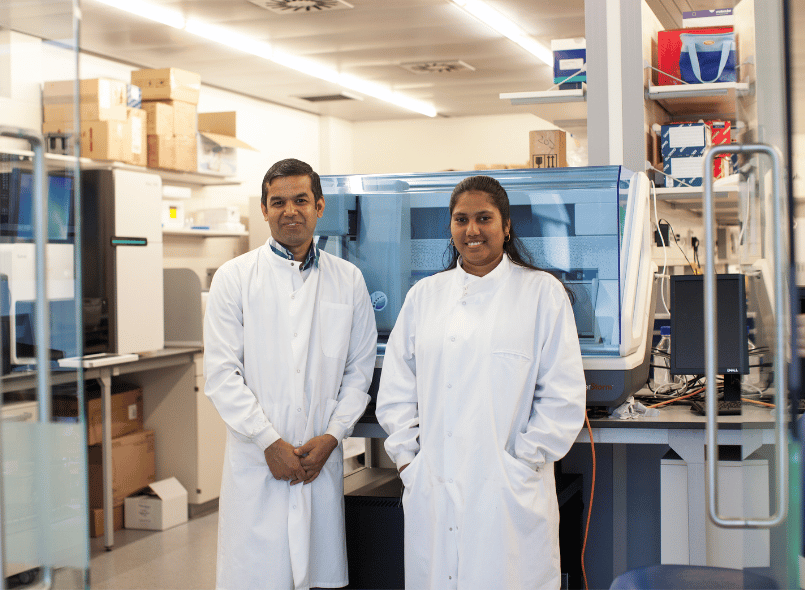
PROTECTOR
Prof Ranjit Manchanda and his team are using a new two-step approach to preventative surgery for those at a high risk of ovarian cancer.
PROMISE
This seven-year international research project hoped to halve deaths from ovarian cancer. It aimed to do this by identifying at risk populations and improving methods for detecting ovarian cancer.
BRCA UNITE
The team behind the BRCA PROTECT Clinic at UCL: clinicians, research nurses, scientists and ‘BRCA Champions’ looked at the processes that may increase or alter the risk of developing cancer in women with a BRCA alteration.