
Genes are made up of DNA. They are found in almost every cell in our body. They contain the information our body needs to grow and work correctly. Genes are inherited. You get half from each parent. Any biological children you may have would inherit half of their genes from you. Sometimes, there are changes or alterations on a gene that can raise the risk of certain cancers.
What are gene alterations?
Sometimes the information in a gene can become altered (also called mutated). This change causes it to not work properly.
There are a few reasons for a gene becoming altered.
Are all gene alterations passed on to children?
No. If the altered gene is carried in the bloodstream, this is known as germline. There is a 50% chance a germline alteration will be passed to any children, whether they are female or male. A test is needed to check whether the alteration has passed down or not.
What gene alterations are linked to gynaecological cancers?
We are learning more and more about gene changes that affect our cancer risk. The most well know types of genes that if altered can raise your risk of gynae cancers are:
- Alterations on the BRCA1 and BRCA2 genes are known to raise your risk of ovarian cancer, as well as breast, prostate (for men and people with prostates) and pancreatic cancer.
- There are some other genes which if altered can raise your risk of ovarian cancer. There is less research on these genes, but we are learning more about them all the time. They are: PALB, RAD51C, RAD51D, BRIP1, AD51D, MLH1, MSH2, MSH6 and PMS2.
- Lynch syndrome is another genetic alteration linked to gynae cancers. It raises the risk of womb cancer, as well as bowel and ovarian cancer. MLH1, MSH2, MSH6 and PMS2 are also known to be linked to womb cancer.
Does having a gene alteration mean you need to look out for cancer symptoms?
Yes. You need to be aware of your body, know the key symptoms to look out for and get any worrying changes checked by a GP. You can read more about ovarian cancer symptoms here, and womb cancer symptoms here.
What do BRCA genes do?
Everyone has BRCA1 and BRCA2 genes. They are known as tumour suppressor genes. They play a role in protecting us from cancer. They help stop the cells in our bodies from growing and dividing out of control. If there is a significant alteration in the BRCA1 or BRCA2 genes, this changes their ability to protect us from certain cancers.
How common are BRCA gene alterations?
Around 1 in every 400 people in the general population will have a BRCA gene alteration. In some populations, they are more frequent. People of Ashkenazi Jewish descent have around a 1 in 40 chance of having a BRCA gene alteration.
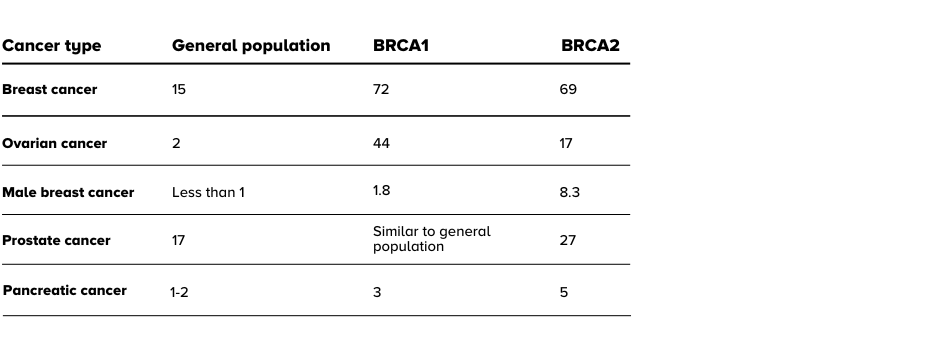
What is your risk of cancer if you have a BRCA gene alteration?
Of every 100 people, approximately the following amount will develop a cancer before they are 80:
How common is Lynch syndrome?
1 in every 300 people in the UK are estimated to carry a genetic alteration associated with Lynch syndrome.
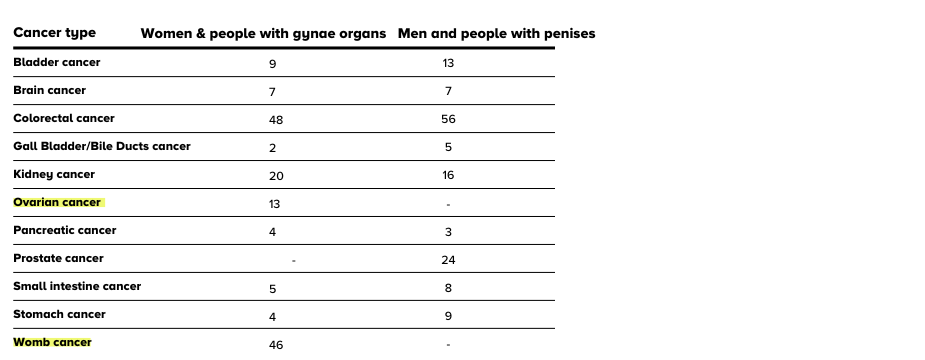
What is your risk of cancer if you have Lynch syndrome?
Of every 100 people, approximately the following amount will develop a cancer in their lifetime:
More information
We have lots more information on inherited risks, BRCA gene alterations and Lynch Syndrome. You can also speak to our Ask Eve nurses for free to chat about any worries or questions.




Our health information meets PIF TICK quality mark.
The PIF TICK is a seal of approval from the Patient Information Forum. It helps you know if health information is trusted, evidence-based and accessible.
To be PIF TICK approved, health information creators must prove they meet 10 key criteria and undergo a robust, independent annual assessment.
Information updated: November 2024. Next review due: November 2027