
My journey has taught me the importance of speaking up when something doesn’t feel right in your body. From my early experiences with misdiagnoses to navigating complex surgeries and treatment options, advocating for myself has been key to getting the care I needed.
On 27 October 2021, I went for an internal scan at the WISH Centre after repeatedly reporting my pain. The scan showed a 2cm cyst on my right ovary. I was told that it was considered “big” but wouldn’t need follow-up, as cysts often resolve themselves.

By December 2022, I noticed my stomach was increasingly bloated, and in January 2023, I could feel and see a visible lump on my lower abdomen. The pain intensified, and I went to my GP. Emergency scans revealed a mass that could not be clearly identified—it wasn’t clear whether it was my bladder or something more serious. I was sent straight to A&E.
At the hospital, after multiple scans and a catheter, it was clear the mass wasn’t my bladder. I was referred to the gynaecology team and underwent MRI scans to better understand the “cyst” and plan treatment.
At my gynaecology appointment, I learned the cyst was benign but required surgery. Initially, it was suggested I might need an abdominal incision, as the cyst had grown significantly. I was aware that my right ovary and possibly my fallopian tube could need removal depending on what was found during surgery.
On 12 May 2023, I underwent surgery. The cyst, which held over 1.5 litres of fluid, was removed. Part of my right ovary was destroyed, but my fallopian tube was preserved. The operation went smoothly, and I was informed there were no complications.
On 1 June 2023, I received a call to see an oncologist. Half of my results had come back, confirming mucinous ovarian cancer. I was informed that I had to have a follow up surgery and that it would involve complete removal of the right ovary, fallopian tube, appendix, and omentum, along with a “clean up” to check for any remaining cancer cells.
On 29 June 2023, I underwent my second surgery. By 12 July 2023, I received positive news—no cancer was found in any of the tissue removed. However, due to the first surgery draining the cyst, there was a risk that cells might have spread, so chemotherapy was offered as a precautionary measure.
I learned that mucinous ovarian cancer is rare, with limited research suggesting it doesn’t respond well to chemotherapy. I also had to consider my fertility carefully, as I now have only one ovary and undergoing chemotherapy could mean that I would be left infertile. I started fertility treatment before chemotherapy and had genetic testing planned to understand any hereditary risks.
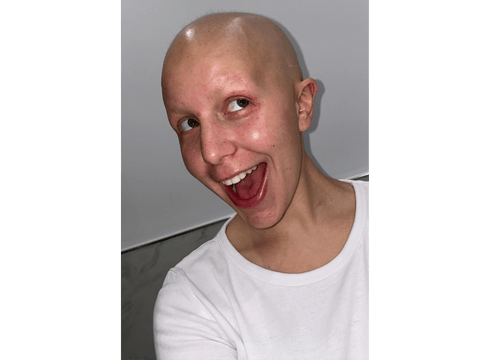
I hope my story encourages others to trust their instincts, ask questions, and seek support. The road hasn’t been easy, but with the right care, knowledge, and perseverance, it is possible to face serious health challenges with courage and hope.