
Dr Esther Moss and her team are aiming to develop a blood test which can distinguish between fibroids and uterine sarcomas. This test could save lives by helping women and people with gynae organs get the correct diagnosis and treatment sooner.
Uterine sarcomas are a rarer form of womb cancer. They make up 3 in 100 cancers in the womb (uterus). They can be difficult to diagnose as they have many of the same symptoms, and look similar on scans, to fibroids. Fibroids are non-cancerous growths in the womb.
Most womb cancers are diagnosed using biopsies taken from the womb lining (called the endometrium), but these biopsies are only able to pick up 1 in 3 uterine sarcomas. This is because they begin from the muscle, rather than the lining of the womb. This can lead to a delayed or wrong diagnosis and potentially harmful treatments, which can risk spreading the cancer. Because of these issues, women and people with gynae organs with uterine sarcomas often face poor outcomes. This is an even greater problem for women from Black communities, as they have a higher risk of both fibroids and uterine sarcomas.
The team will be trying to develop a test that uses circulating tumour DNA. Circulating tumour DNA is small fragments of genetic material that is released into the bloodstream by cancer cells. The team will look for circulating tumour DNA that fits the unique genetic profile of uterine sarcomas, creating a test which can distinguish whether someone has a sarcoma and not a fibroid or other type of womb cancer.
It is fantastic that The Eve Appeal and all their kind donors have supported the Rare Gynae Cancer Fund to make this project possible. Uterine sarcomas are rare cancers that can have potentially devastating impacts on patients and their families. We hope this test will make a real difference to women with uterine sarcoma. – Dr Esther Moss
Discover more
Take a look at some of our other research into the prevention and earlier detection of rarer gynaecological cancers.
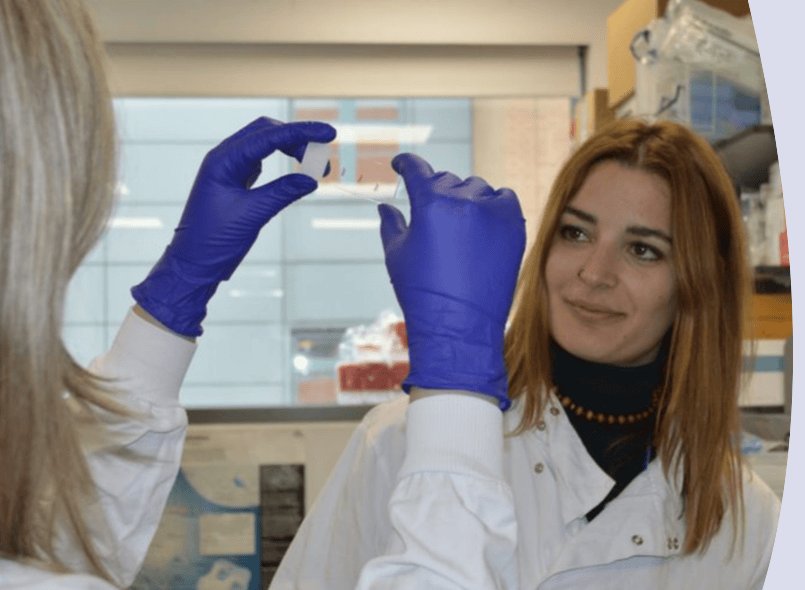
Biomarkers for mucinous ovarian cancer
Professor Sudha Sundar from the University of Birmingham and her research group are looking for biomarkers that could help detect mucinous ovarian cancer.

Small cell ovarian cancer
Dr Will Foulkes and his team at McGill University are creating a patient registry and international consortium of experts for this rare form of cancer to help promote worldwide research efforts.
Vulval cancer risk prediction
Dr Jason Yap and his team want to identify which early genetic alterations (sometimes called mutations) associated with lichen sclerosus may lead to the development of vulval cancer.
A kinder way to diagnose and treat vulval cancer
A team from Imperial College London are looking into a more accurate and kinder way to diagnose and treat vulval cancer.