
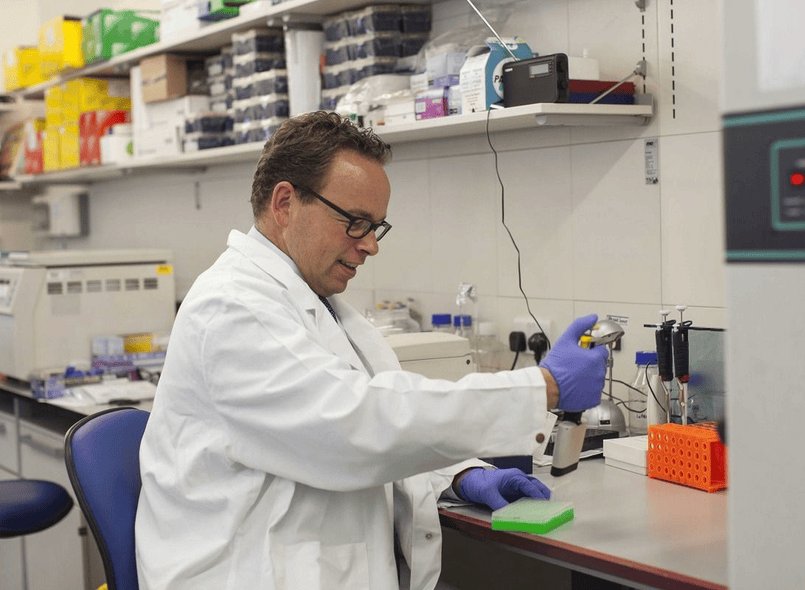
Dr Ranjit Manchanda, who is The Eve Appeal’s research lead and acting Principal Investigator on the GCaPPS trial – shares his vision for future research into the cost-effectiveness of population-based testing for ovarian cancer.
Women with BRCA1 and BRCA2 alterations are at high risk of developing ovarian and breast cancer. Traditionally, to be eligible for genetic testing, women need to have a strong family history of breast and ovarian cancer, or a close family member known to have a BRCA alteration. Testing is usually done at specialised cancer genetic clinics after face-to-face genetic counselling.
This approach misses more than half of individuals with a BRCA1/BRCA2 gene alteration. Ranjit and his team are at the forefront of exploring population testing- where testing is offered to anyone over the age of 18 years irrespective of their family history of cancer.
The team are now looking into the health economic implications for population testing of all women for a number of ovarian and breast cancer causing gene alterations. They are developing mathematical models to do this and hope that offering genetic testing to anyone who wants it is likely to be cost-effective, will prevent many more cancers and save lives.
Discover more
Find out more about our research into BRCA gene alterations and preventing ovarian cancer in those at higher risk.

PROTECTOR
Prof Ranjit Manchanda and his team are using a new two-step approach to preventative surgery for those at a high risk of ovarian cancer.
BRCA UNITE
The team behind the BRCA PROTECT clinic at UCL: clinicians, research nurses, scientists and ‘BRCA Champions’ looked at the processes that may increase or alter the risk of developing cancer in women with a BRCA alteration.