
This Ovarian Cancer Awareness Month, we are highlighting the need for more research funding in ovarian cancer prevention and diagnosis. Sbba blogs about her ovarian cancer diagnosis and the importance of symptom awareness.
As a woman of south Asian heritage, I never spoke about my gynaecological health until my ovarian cancer diagnosis, because in my community it just isn’t done. Anything to do with the female body is first and foremost always viewed sexually and never medically. We don’t talk about menopause, sex, sexual intimacy, and shock horror if you even mention the word ‘period’ in front of a brother, father, or uncle. That’s how deep the taboos go.
Like many of you I wear many hats. I am the Co-founder and Director of Asian Star Radio; I present a weekly health and lifestyle radio programme; I am an award-winning podcast host; I am a passionate craftivist; I lead a knitting and crochet group called Knit Your Socks Off. I am a wife, a mother, a daughter, a sister, a friend and an aunt. The list goes on.
But in March 2022, none of that mattered – after being misdiagnosed for six months, my world fell apart when I was told the dreaded words no one wants to hear. I had stage 3c ovarian cancer. It took me six months to get my GP to take my symptoms seriously. As a woman over 50, I was continually being dismissed as being ‘just menopausal’. When I finally got my diagnosis and given the fact there was no history of cancer in the family, it came as a horrific shock. I had never even heard of ovarian cancer before, let alone suspected that my symptoms could be cancerous.
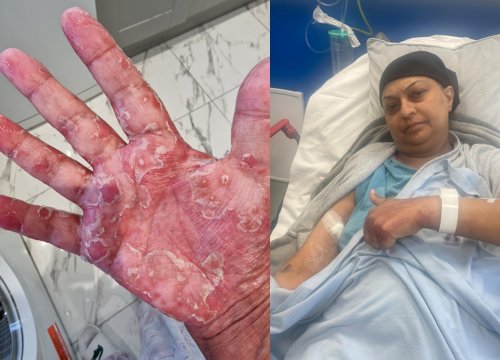
Treatment was tough and I underwent two surgeries, IV chemo and oral chemo. My first surgery failed as the cancer had spread further than my pre surgery scans showed. So I underwent IV chemo to try and shrink the tumours before I could have surgery again. IV chemo bashed my body – the side effects were debilitating – fatigue, loss of taste, hair loss, sickness, diarrhoea, and neuropathy in my hands and feet which has left me with a permanent disability.
Sadly, IV chemo also failed and I moved onto oral chemo. I developed a rash that started off as acne on my face but spread from the top of my head to the soles of my feet. A&E doctors diagnosed the rash as what an acid burn victim would experience. The most upsetting thing about this whole period was that I found absolutely no information anywhere on what the rash would look like on south Asian skin.
I had my second surgery in February 2023 and by God’s grace Allhumdulillah it was successful, and I achieved 100% tumour free. I have now been in remission just over two years and even post being no evidence of disease, it has been a rollercoaster.
Cancer is the journey no one wants to take. All too often women’s pain and discomfort has not been taken seriously, so it is crucial women are empowered to be able to take responsibility for their own health.
Knowledge is Power! Ovarian cancer symptoms awareness is essential not only for women but also GP’s. What also makes this so pertinent is that there are no viable screening programmes for the disease. Early detection leads to better outcomes, fewer invasive treatments, and more time with loved ones. There must be a shift, particularly in marginalised communities, on opening up about the cancer conversation in order to shatter the taboos and stigmas that are inherent in my community.
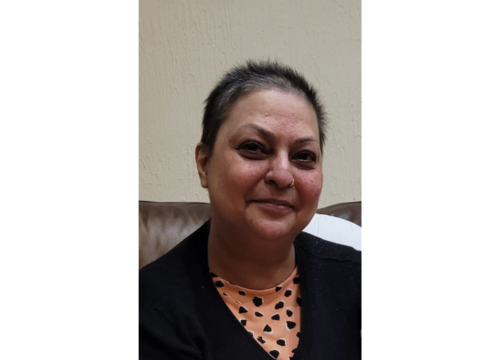
What will also encourage open conversations is visibility and representation of marginalised communities in supporting literature and support services, to provide reassurance that their care will be culturally competent because they see themselves represented in it.
These are our mothers, daughters, sisters, aunts, and friends—women we love and women who deserve better.