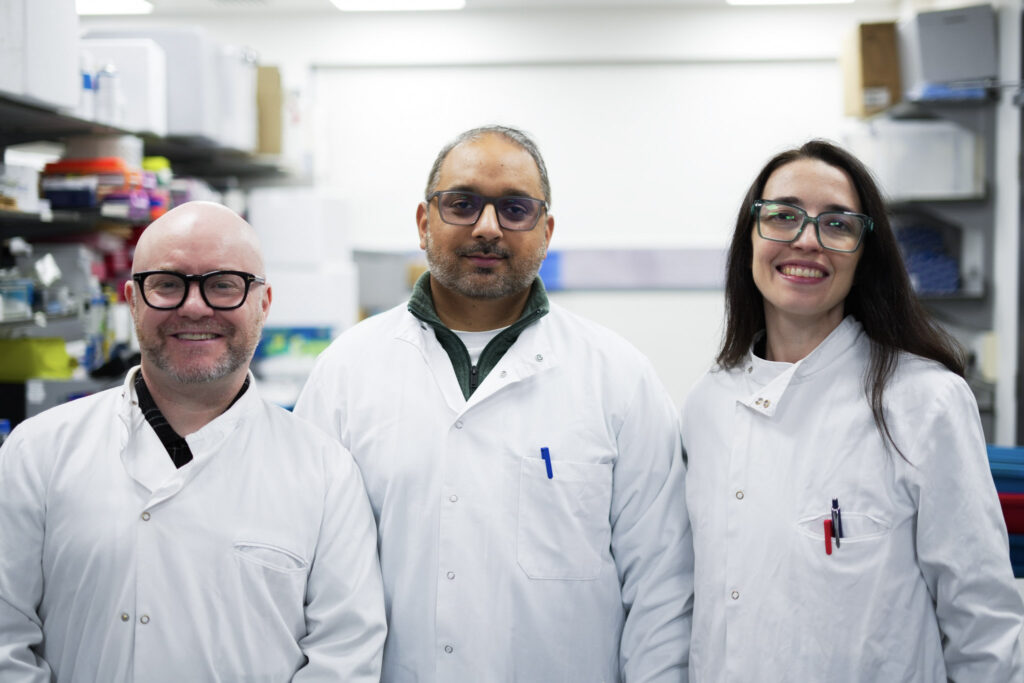
Mr Hasan Mirza and his team at Imperial College London are investigating genetic patterns in precancerous changes that could help identify who is most likely to develop ovarian cancer.
Women with BRCA1 or BRCA2 alterations have a higher risk of developing a common form of ovarian cancer called high grade serous carcinoma over their lifetime compared to the general population (40-50% compared to 1.5%).
To reduce the risk of developing ovarian cancer, these women with BRCA alterations can undergo surgery to remove their ovaries and fallopian tubes. Sometimes, precancerous changes (called serous tubal intraepithelial carcinoma) are found during these surgeries. Having precancerous changes does not mean you will get ovarian cancer, but they are the first step in cancer developing.
Hasan’s study looks at changes in genes in very early, pre-cancer changes to understand which ones are more likely to turn into cancer. The researchers will compare the genetic make-up of early fallopian tube changes with that of advanced ovarian cancer in women who have BRCA1 or BRCA2 alterations. They will also study rare cases where women with these early changes later developed cancer, to see if there are shared genetic features and whether warning signs linked to poorer outcomes can already be seen at this early stage.
If successful, this study could lead to better ways of monitoring and treating women with precancerous changes, especially those with an increased risk of cancer because of BRCA gene alterations.
We are very grateful for The Eve Appeal and its generous funders, all the fundraisers and patient groups. Your belief in this work is what makes it possible, and we are very excited to get started and work towards better outcomes for patients – Hasan Mirza