Womb cancer is on the rise in the UK, and diagnoses have gone up by 41% since 2001 in England. It is the most common of the five gynae cancers, and the fourth most common cancer in women. Womb cancer is also called uterine cancer or endometrial cancer.
It affects 9,700 women and people with gynae organs a year in the UK. Until now, there has been no national monitoring of womb cancer care and outcomes in England. In partnership with the British Gynaecological Cancer Society and Peaches Womb Cancer Trust, we have co-funded a pilot audit on womb cancer care. It is hoped that the pilot will find out what data is available for tracking womb cancer care and whether it is possible to track variations across the country. We hope that it will be the beginning of regular national auditing of womb cancer, improve treatment and outcomes and be expanded to include the rest of the UK.
Today, the treatment report, the second paper of the pilot audit was published, focusing on treatments used for womb cancer and highlighting any regional variations in England between 2017-19. The first paper published the baseline data and found that womb cancer was indeed on the rise, and there was some variation in outcomes for patients across England depending on where they lived and their background.
Womb cancer treatments
When treating womb cancer, there are several options:
- Surgery – The most common treatment for womb cancer is surgery. They remove the womb and cervix. This surgery is called a total hysterectomy. If the cancer is found early, often patients may not need any other treatment. Hysterectomies can be either open surgery, laparoscopic (keyhole) or robotic.
- Brachytherapy – Some women and people with womb cancer are also treated with brachytherapy. This is a type of internal radiotherapy where radiotherpay is given through special applicators placed in the vagina.
- Radiotherapy – Depending on the stage of cancer, some people may have external beam radiotherapy. This is where a machine beams high-energy rays at the pelvis from outside the body.
- Chemotherapy – Chemotherapy has a much smaller part to play in the treatment of womb cancer. This is because research has shown it has not been very effective.
- Immunotherapies – Immunotherapy is a fairly new treatment which uses the immune system to kill cancer cells. It is beginning to be available as an option to women with advanced or recurrent womb cancer.
- Hormone treatment – Hormone treatment (which can also be called endocrine treatment) is sometimes used in younger women who want to have a family, or for people with more advanced disease.
The audit looked at routine patient records to see the variation in treatment, including hysterectomy, chemotherapy, brachytherapy, radiotherapy, hormone treatment and lymph node checking for signs of spread.
The findings
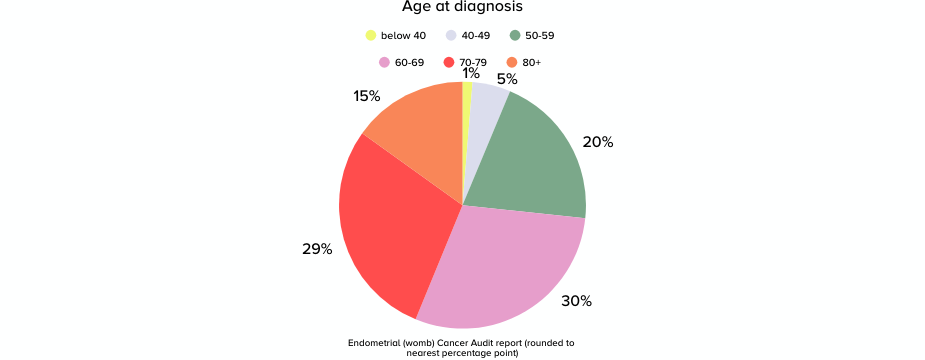
The audit found that a total of 23,386 women were diagnosed with womb cancer in England from 2017 to 2019. Their average age was 67 years old. Most of the women (around 7 in 10) were diagnosed with stage 1, low grade endometrioid adenocarcinoma tumours. This is the most common type of womb cancer.
Treatment variation
The type of treatment people had, whether hysterectomy, chemotherapy, and radiotherapy, varied by patient characteristics and the features of the cancer. The audit also found that there was a variation in treatment based on your ethnicity and whether you were from an area of high or low deprivation. This means that there is some variation in treatment which isn’t due to medical reasons and is an inequity in care. Geographically, treatment rates were significantly higher in areas with a specialist gynaecological cancer centre.
This regional variation in treatment was most significant for hysterectomy and chemotherapy.
There was variation in:
- The type of hysterectomy surgery used
- Whether chemotherapy was given before or after hysterectomy
- The type of radiotherapy (external beam or brachytherapy)
- Which combinations of treatments they received.
Surgical treatment
Over 8 in 10 of the women diagnosed during this time had a hysterectomy as part of their treatment. There was a little variation seen regionally, with those treated at a specialist centre being more likely to have a hysterectomy. Although most of the regions did fall within an expected range.
Among the women who had a hysterectomy, over 65% of them had a minimal access surgery like vaginal, robotic or laparoscopic. The most common surgical treatment was a laparoscopic hysterectomy.
Lymph node assessment
The audit found that there was regional variation in the number of women who had their lymph nodes checked for signs of cancer spread, and it was lower than expected. In January 2019 the British Gynaecological Cancer Society published a consensus statement on the use of sentinel node biopsy in gynae cancers, and it is believed that things have improved since then. There is evidence that the number of people having their sentinel lymph nodes checked rose from 5% in 2017-19 to 15% by the end of 2022.
Although the audit did show some variation in treatment for womb cancer, it was mostly within expected range. Where larger variations were seen, they were in areas expected to have improved since 2019, like lymph node assessment. There are some issues with health inequities, with women less likely to receive treatment if they are from an area of deprivation or from a minoritsed ethnic group. We hope this audit will be continued on a yearly basis and the data can support future guideline reviews and service improvements to try improve womb cancer care and reduce inequities and postcode lotteries.
A huge thank you to all of our donors, who helped make this audit possible.
Acknowledgement
This work uses data that has been provided by patients and collected by the NHS as part of their care and support. The data are collated, maintained and quality assured by the National Disease Registration Service, which is part of NHS England.