Germ cell ovarian cancers begin in the cells in our ovaries that mature into eggs (called germ cells). As a group of cancers they are the second most common type of ovarian cancer and account for around 1 in 4 to 1 in 5 ovarian cancers. The majority of these are a type of tumour called mature cystic teratomas.
Germ cell cancers account for 1-3 in every 100 ovarian cancers in Western countries and 2 in 3 ovarian cancers in women and people with ovaries under 30. The proportion of people diagnosed with this type of cancer is much higher in Afro-Caribbean and Japanese communities, who are less at risk of epithelial ovarian cancers.
Dysgerminoma is the most common type of germ cell cancer. It accounts for approximately 45% of germ cell cancers. The second most common is immature teratomas and then yolk sac tumours.
In women and people with ovaries under 30, germ cell tumours are the most common ovarian cancer diagnosis, and approximately 1 in 3 germ cell tumours found in those younger than 21 are cancerous (malignant).
Germ cell tumours usually affect the one ovary (unilateral), except for a few sub-types called benign cystic teratomas and dysgerminomas, which tend to affect both.
Benign cystic teratoma (dermoid)
These usually happen in younger women who are pre-menopausal, but do sometimes happen after the menopause, and have been known to affect children. Teratomas have the ability to produce tissues such as skin, bone, teeth, and hair.
Dermoids are usually just in the one ovary, but 10-15% affect both ovaries (bilateral). These tumours are often asymptomatic, which means they have no symptoms, but can sometimes cause severe pain if there is torsion (which is when the ovary twists) or if the cyst wall is perforated.
How are teratomas treated?
They are usually treated surgically, either by removing just the tumour (called an ovarian cystectomy) or by removing the whole affected ovary (unilateral oophorectomy). In those who are post-menopausal, the treatment for a dermoid tumour usually includes removing the womb, fallopian tubes, and both ovaries.
Immature teratoma
Immature teratomas are a cancerous tumour and make up as many as 1 in 5 ovarian cancers found in women under 20, but less than 1 in 100 of all ovarian cancers. They rarely happen after the menopause. The prognosis depends on the stage of the disease and grade of the tumour (how aggressive the cancer cells are). Those diagnosed at an early stage have good survival rates.
Dysgerminoma
These are the most common sub-type of cancerous germ cell tumour. They usually happen in women and people with ovaries who are under 30 years old. Sometimes this type of tumour is discovered during a pregnancy. Most dysgerminomas are bilateral, which means they affect both ovaries. Blood tests for tumour markers are an important part of diagnosing this type of cancer as nearly 95 in every 100 have a raised LDH level and about 3 in 100 have raised BhCG levels.
If the tumour is just affecting one ovary, than fertility-sparing surgery to remove the tumour or just the one ovary is used as treatment. Chemotherapy can be used in the treatment of this cancer, usually for when there is residual disease after surgery or if the cancer returns later down the line (called recurrent disease). Prognosis for this type of cancer is normally very good.
Yolk sac tumours
Yolk sac tumours make up 1 in 10 cancerous germ cell tumours. They look like a yolk sac of an egg. They are often fast growing. The tumour secretes a-fetoprotein, which is a specific marker which can be used for diagnosing and monitoring these tumours. They more commonly happen in younger women and people with ovaries, usually between the ages of 13 months and 45 years old. The average age at diagnosis is 19.
They are usually treated with surgery and combination chemotherapy. The prognosis of this type of cancer depends on the stage at diagnosis. The survival rate at stage 1 is 70-90%.
Choriocarcinoma
Choriocarcinomas are a rare sub-type of germ cell tumour. They mostly happen in women and people with ovaries under 20 years old. They are usually treated with surgery and combination chemotherapy.
Embryonal carcinoma
Embryonal carcinoma is another rare sub-type of germ cell cancer. It usually happens between the ages of 4 and 28 years old. They are often large solid masses. Treatment for this type of cancer is with a combination of surgery and chemotherapy, which usually has good results.
Polyembryoma
Polyembryomas are a type of tumour usually found in the testes, but can sometimes, although rarely, happen in the ovary.
Struma ovarii and carcinoid
These two rarer sub-types of germ cell tumours usually happen in older women and people with ovaries and tend to grow slowly. Because they grow slowly the prognosis after hysterectomy and removal of both ovaries is usually very good.
Mixed Germ Cell Tumours
This is when women have a combination of any types of germ cell tumours in one of both ovaries.
Most people with these tumours are young and it usually happens in just the one ovary (unilateral). This often means fertility-sparing surgery can be used as a treatment.
More information and advice
We have lots more information and advice on ovarian cancer. You can also contact our Ask Eve nurses for free to chat about any worries or questions.



Real Stories
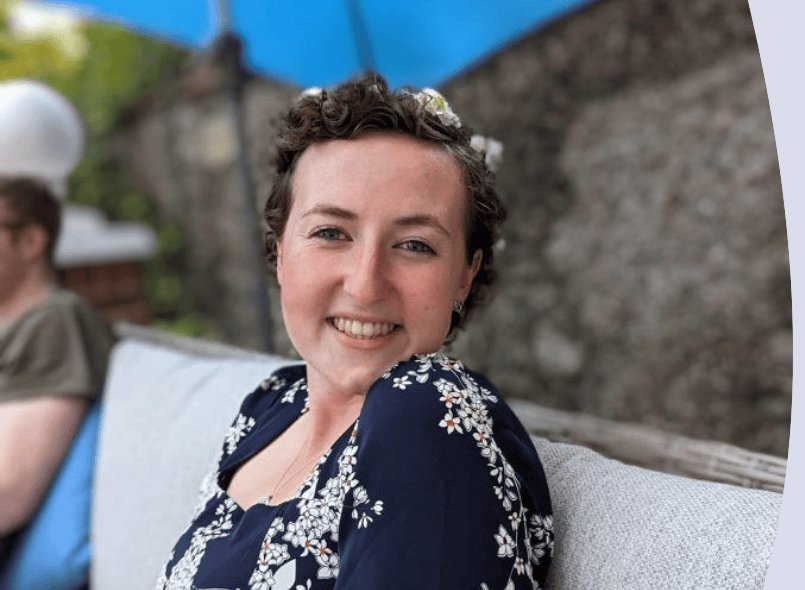
‘I thought that ovarian cancer only occurred in older women’
Jess shares her story of being diagnosed with a rare form of ovarian cancer

‘I always say, if it don’t feel right, get it checked out.’
Shalisha writes about her experience of ovarian cancer.

‘Grieving the loss of an ovary’
Izy shares her story of her diagnosis and journey with a borderline ovarian tumour.