
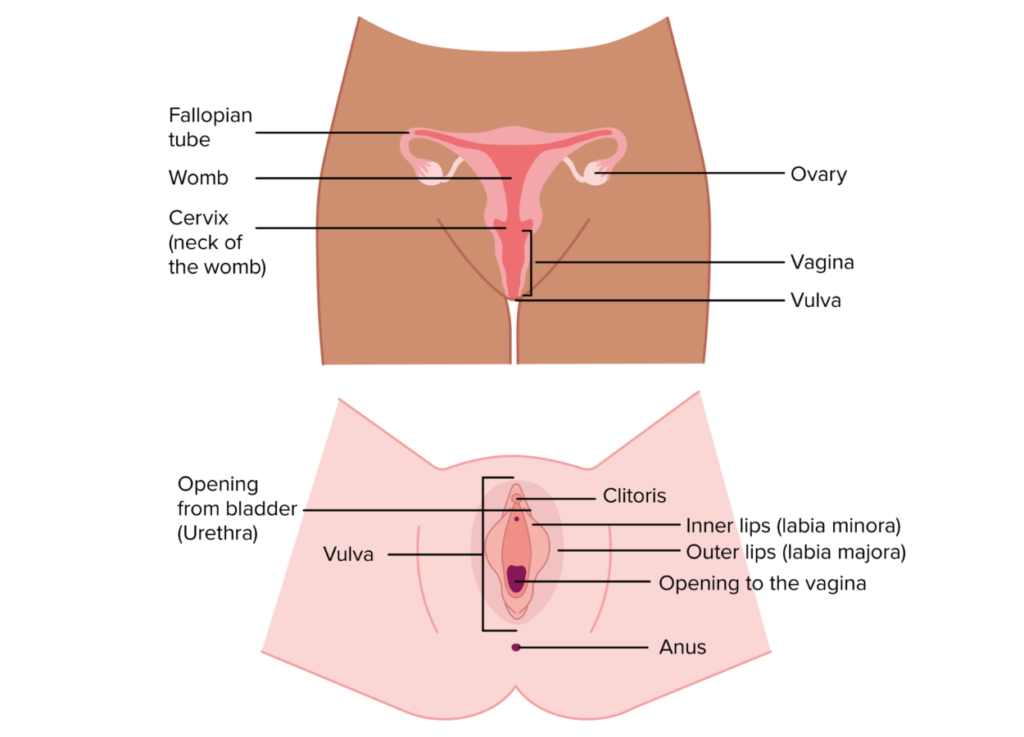
The vulva is the name of the external genitalia in women and people with gynae organs. It includes the soft tissue (lips) surrounding the vagina (labia minora and labia majora), the clitoris, and the Bartholin’s glands, two small glands each side of the vagina that secrete fluid to enhance lubrication.
Everyone’s vulva is unique– the shape, size, texture and scent, which is why it’s crucial to know what’s normal for you. This way, any changes—no matter how small—are easier to spot, potentially catching cancer early when it’s more treatable.
Knowledge is power and checking your vulva regularly could just save your life.
How to check your vulva
We encourage women and people with gynae organs to check their vulva once a month. Here are our top tips for self-checking:
- Wash your hands
- Sit comfortably, with a mirror, in a well-lit room or use a torch
- Place the mirror between your legs
- Start on the outside and look and feel for any pain, soreness, lumps, rashes or changes to your skin.
- Open the labia, look and feel for any pain, soreness, lumps, rashes or changes to your skin.
- Check around the opening to your vagina and your perineum
If you spot any new changes or you are worried about anything you have noticed, it is always best to get in touch with your GP so anything serious can be ruled out. There are other non-cancerous conditions that can cause some of these symptoms, it is important these are also diagnosed early so they can be treated.
If you’re worried about any changes to your vulva, or other gynae health symptoms, the Ask Eve nurses are here to give free and confidential information. Get in touch on nurse@eveappeal.org.uk, 0808 802 0019 or by filling in the online form.
What should you be looking out for?
The symptoms of vulval cancer include:
- A persistent itch
- Pain or soreness
- Thickened, raised, red, lighter or darker patches on the vulval skin
- A new mole or a mole that is changing shape or colour
- An open sore or growth
- A lump or swelling
- A rash
- Anything that is not normal for you.
Follow along with a guide
Find it easier to follow a guide? You can use our follow along tool to help you make sure you are checking everything you need to when it comes to your vulva.