
This page has information on:
- What is a cervical screening test and how does it work?
- Who is invited for cervical screening?
- How do I book my cervical screening?
- What should I expect when I go for my cervical screening?
- Your frequently asked questions
- Frequently asked questions for LGBTQ+ people
- Common cervical screening worries
- Frequently asked questions for people over 65
We have some tailored information on cervical screening, including tips to make the appointment easier, for survivors of sexual trauma developed with The Survivors Trust, and for trans men and non-binary people:
What is a cervical screening test and how does it work?
Cervical screening (which used to be called a smear test) is a free health test on the NHS to help prevent cervical cancer. It checks for a virus called high-risk Human Papillomavirus (HPV). If high-risk HPV is present, then the sample will be checked for cervical cell changes. It is not a test to diagnose cervical cancer.
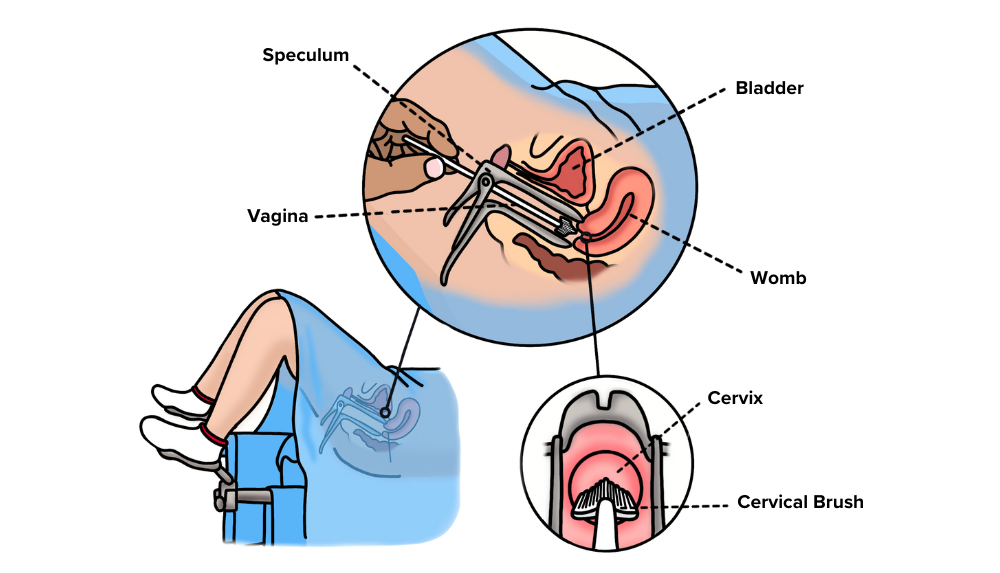
Cervical screening
During cervical screening, a healthcare professional will collect a sample of cells from the cervix. They will insert a lubricated speculum into the vagina. This will open up the vaginal walls. They then take a sample of cells by sweeping the cervix with a soft plastic brush. The sample will be sent off to a laboratory for testing.
The sample will be tested for high-risk HPV. This is the common virus which causes nearly all cervical cancers. If high-risk HPV is found, the sample will be checked for any changes to the cells. These cells aren’t cancer. These changes could lead to cervical cancer in the future if they are not monitored or treated.
High-risk HPV is passed on through skin-to-skin sexual contact. 8 in 10 of us will come into contact with HPV during our lives. The immune system usually clears HPV within two years before it causes any problems. If HPV doesn’t clear, it can cause changes in the cervical cells and increase the risk of cancer.
If HPV doesn’t clear and it causes changes in the cervical cells, they will be graded. They will be graded into either cervical intraepithelial neoplasia low grade (called CIN1), medium grade (CIN2) or high grade (CIN3).
Who is invited for cervical screening?
Cervical screening starts at the age of 25 in the UK. Anyone with a cervix is eligible. This can include cis women, trans men, non-binary, and intersex people.
If you are registered as female with a GP surgery, you will get an invitation up to six months before your 25th birthday. If you are in England, it will be sent via the NHS App. If you do not have the app, or don’t get the message, you will be sent a text (SMS). If you don’t receive or open this text, you will be sent a letter.
If you are in Scotland, Wales or Northern Ireland you will be sent a letter. You can then contact your GP surgery to book your cervical screening appointment.
In England, Scotland and Wales you will be invited every five years. In Northern Ireland, you will be invited every three years until the age of 50, then every five years until the age of 64. If you have high-risk HPV or any cervical cell changes, you will be checked more often.
If you are trans and registered as male at your GP surgery, you may not get invited automatically. But, if you have a cervix, you are still at risk of cervical cancer. You can contact your GP surgery to book your screening and opt in to receive automatic invites in future.
How do I book my cervical screening?
When your cervical screening is due, you will be sent an invitation to book your appointment. If you are in England, this invitation will come through the NHS App, if you don’t have the app, or don’t see the message, this will be sent via a text (SMS). If the text isn’t received or read, you will be sent a letter. If you are in Scotland, Wales or Northern Ireland you will be sent a letter. Your invitation will tell you how to book an appointment. Invitations are sent six weeks before your screening is due. You can only book an appointment when you have been invited and are due.
In some areas, cervical screening is offered in other places as well as your GP surgery. You may choose where to have your test done if options are available.
What should I expect when I go for my cervical screening?
When you go for your cervical screening test, the healthcare professional will take a sample of cells from your cervix. You will be asked to take off your clothes from the waist down, lie on the couch and make yourself comfortable. You will be given some privacy for this, and a sheet to cover yourself with. Some people find it helpful to wear a long skirt or dress. This is because you can keep them on during the appointment.
You can ask for a second person in the room for support. This can be a friend, family member, carer, or a member of staff called a chaperone. If you have a male nurse or doctor, there will also be a woman in the room. If not, you have the right to ask for one to be in the room.
You will be asked to lie on your back with your legs bent and the soles of your feet together, or to lie on your back and put your legs in the leg rests. If you can’t do this, you can ask if you can lie on your side. If any of these positions are difficult for you, your healthcare professional can advise on your options.
During your cervical screening, a doctor or nurse will collect a sample of cells from the cervix. They will insert a lubricated speculum into the vagina. This will open up the vaginal walls. A sample of cells is taken by sweeping the cervix with a soft plastic brush. The sample will be sent off to a laboratory for testing.
You may have some light bleeding (spotting) for a day after the test. It may help to wear a period pad or panty-liner.
Your cervical screening results should arrive by post within four weeks.
What is HPV self-testing and am I eligible?
The NHS will start inviting people who are overdue routine cervical screening to request a HPV self-testing kit.
The HPV self-testing tests checks for high-risk HPV from a sample of cells taken from the vagina.
The test is a swab test, which is like a long cotton bud. You insert it into the vagina to get a sample of cells from your vagina. You then post it back for testing. The test will come with clear instructions and a pre-paid return envelope to post the sample back.
You will be sent your results, which will tell you whether you have high-risk HPV or not. If you have high-risk HPV you will be invited for a cervical screening test at your GP surgery so that your cervical cells can be checked for cell changes.
Your frequently asked questions
We have answered some of your most common questions about cervical screening, including tips on how to make the appointment easier.
What are the benefits and risks of cervical screening?
You are invited for cervical screening because research shows it is a reliable test in helping reduce the risk of cervical cancer, and the benefits outweigh any risks. Along with the HPV vaccine, cervical screening is the best way to protect against cervical cancer. It prevents over 7 in 10 cervical cancers.
What is the difference between cervical screening and a smear test?
Smear test is the old name for cervical screening. It was called this because of the way the test used to be done. Cells used to be smeared on a glass slide which was sent to the laboratory for testing.
Cervical screening is now done with a soft brush and the sample is put in a pot to be sent for testing. This is why we now call it cervical screening.
What is HPV primary screening?
HPV primary screening tests for a virus called high-risk HPV. High-risk HPV may cause cervical cell changes. If high-risk HPV is found, the sample will be checked for any changes to the cells. These cells aren’t cancer but could lead to cervical cancer in the future if they are not monitored or treated.
Does cervical screening check anything other than the health of my cervix?
No. Cervical screening only tests for high-risk HPV and cervical cell changes. These cell changes may eventually develop into cancer if they aren’t monitored or treated. It does not check for any other conditions or cancers.
Why can’t I have cervical screening unless I am aged 25 to 64?
It is very rare to develop cervical cancer under the age of 25. It is also rare to develop cervical cancer over the age of 64 if you have had regular cervical screening.
If you are 65 or older and have never had cervical screening, you are entitled to a test. You can book an appointment with your GP surgery.
Cervical screening is not for people with symptoms. If you have any symptoms, which are unexpected changes to your periods or bleeding (after sex, between your periods, after the menopause), or any changes to discharge, see your GP for an examination.
What if I missed my cervical screening?
You can still book an appointment if your screening is overdue, a letter is not needed. Contact your GP surgery to book in.
From 2026, the NHS will start posting out HPV self-testing kits to be done at home to people who are at least six months overdue cervical screening or have never been screened. The test will come with clear instructions and a pre-paid return envelope to post the sample back. The test is a swab test, which is like a long cotton bud. You insert it into the vagina to get a sample of cells from your vagina. You then post it back for testing.
You will be sent your results, which will tell you whether you have high-risk HPV or not. If you have high-risk HPV you will be invited for a cervical screening test at your GP surgery so that your cervical cells can be checked for cell changes.
Can I buy a HPV self-testing test privately?
HPV self-testing kits are available to buy privately, but the quality and reliability varies.
You can only access cervical screening on the NHS if you have been invited and are due a test. This means that if you get a HPV positive result from a private HPV self-testing test, you cannot book in a cervical screening test to check for cell changes or get any further monitoring or treatment, unless you are due. The results from the private test also can’t be added to your NHS cervical screening records. This can understandably cause a lot of worry and upset.
The best way to help reduce your risk of cervical cancer is to get your HPV vaccination if you’re eligible and attend your cervical screening test when invited.
Can I opt out of cervical screening?
It is your choice whether you go for cervical screening. The NHS invites you for cervical screening from age 25 to 64 because research shows that screening at this age is the best way to make sure your risk of developing cervical cancer is low.
If you decide not to have cervical screening, you can ask your GP to be opted out of the programme. If you change your mind, you can ask your GP to re-enter you into the programme.
Can I get my cervical screening results from Ask Eve?
No. Ask Eve is run by The Eve Appeal, which is independent from the NHS Cervical Screening Programme. If you have questions about when you will get your results, ask your GP surgery.
Will cervical screening hurt?
Some people find cervical screening uncomfortable, but it shouldn’t be painful. Some health conditions may make screening more uncomfortable, or even painful. These include endometriosis, vaginismus, vulvodynia, and being menopausal. If you have a health condition that makes cervical screening painful, tell your GP. Sometimes, cervical screening tests can be more difficult for people who have experienced sexual trauma, birth trauma, FGM, or have body dysmorphia. Speak to your healthcare professional about any worries. There are a few things they can do to make you feel more comfortable, like using a smaller speculum. See our tips page for more details.
We have specific information, developed with The Survivors Trust, for survivors of sexual trauma, which you can find here. We also have information specifically for trans men and non-binary people, which you can find here.
I have had the HPV vaccine, do I need my screening test?
Yes. The HPV vaccine lowers your risk of HPV, but doesn’t completely protect against it. So, it’s still important to go for cervical screening. The current HPV vaccine protects against nine strains of HPV. These are low-risk types 6 and 11, and high-risk types 16, 18, 31, 33, 45, 52 and 58. There are five other strains of high-risk HPV that are not covered by the vaccine. Nearly all cervical cancers are caused by high-risk HPV.
If you’ve been vaccinated, it is still important to go for cervical screening. It will pick up high-risk HPV. If it is present, then your sample will be checked for any changes to cells of your cervix. Together, vaccination and screening prevent thousands of cases of cervical cancer a year. So, it is important to have both if you’re eligible.
I am on my period, can I still go for my screening test?
Try to book your cervical screening for when you are not on your period. Menstrual blood can make it difficult to get an accurate result. If you are due your period when your test is booked, get in touch with your GP surgery to change the appointment.
Should I go for cervical screening if I am pregnant?
It is usually recommended that you do not have cervical screening while you are or could be pregnant. Pregnancy can affect the results of your test.
If you are invited for cervical screening while pregnant, tell your healthcare professional that you are pregnant. You should wait until three months after your pregnancy ends before having a cervical screening test.
If you need follow-up after an abnormal cervical screening result, or treatment for cell changes, you may need to have the test while pregnant. Your colposcopy team will chat to you about your options.
I have had a gynaecological cancer (not cervical) in the past. Do I need cervical screening?
If you still have a cervix, then you will need cervical screening. Your GP or cancer specialist will be able to talk to you about this.
Do I need cervical screening after a hysterectomy or another treatment?
If you have previously had treatment that affected your cervix, you may no longer be invited for cervical screening. These treatments include:
-A total hysterectomy. This is an operation that removes the womb and cervix. If you have had a total hysterectomy, you will not be invited for cervical screening. This is because there is no cervix to take a sample of cells from.
-Pelvic radiotherapy. This is a treatment that directs radiation at the part of the body between the hipbones (pelvis). It can damage the cells of the cervix and make it harder to tell if there are any changes. If you have had pelvic radiotherapy, you may not be automatically invited for cervical screening. Your doctor may do a separate follow-up appointment with you.
Your healthcare team will speak to you about what screening to expect after these treatments.
I haven’t had sex. Do I need to go for my screening test?
‘Having sex’ can mean different things to different people. You can get HPV from any form of sexual contact. This includes sexual touch, oral, vaginal and anal sex, and sharing sex toys. If you have never had any form of sexual contact, then you are at a lower risk of cervical cancer. It is still important to attend your cervical screening when invited.
Frequently asked questions for LGBQT+ people
We have answered some of your most common questions about cervical screening.
I’m trans. Do I need to go for a cervical screening test?
If you have a cervix, you are still at risk of cervical cancer. It is important to get screened if you can. If you have any worries or concerns about cervical screening, speak to your healthcare professional. Our Ask Eve nurse service can also give free information.
I am a woman who has only had sex with women. Do I need a cervical screening test?
Yes, you do. Unlike other sexually transmitted infections (STIs), HPV is transmitted by skin-to-skin contact. This includes touching of the genitals, oral, vaginal and anal sex, as well as sharing sex toys. It can be anywhere, such as your fingers and mouth. You can get HPV from just one sexual experience. You do not need to have had penetrative sex to get HPV.
I am asexual. Do I need to go for a cervical screening test?
Everyone with a cervix should go for a cervical screening test if they can, no matter their sexual orientation or sexual history. HPV is a common virus. Over 8 in 10 people will get it in their lifetime. HPV is transmitted through skin-to-skin sexual contact. This includes sexual touch, oral, vaginal and anal sex, and sharing sex toys. So, if you have had any form of sexual contact, you may have been exposed to HPV. This means you could be at risk of cell changes and cervical cancer.
If you haven’t had any sexual contact then you are at a lower risk of cervical cancer, but it is still important to go for your cervical screening when invited.
Common worries about screening
I am worried screening will be difficult for me as I am a survivor of sexual trauma.
Sometimes people who have experienced sexual trauma can find cervical screening triggering. There are some things which you can try which may help make the experience easier.
To help support you, we developed a guide with The Survivors Trust, which you can find here.
If you need support, do get in touch with our Ask Eve nurses. They can help with information and support. You can email them on nurse@eveappeal.org.uk or call 0808 802 0019. The Survivors Trust also has a support line on 0808 801 0818.
I have a learning disability and I’m worried about going for cervical screening.
We know that going for cervical screening may be scary. We have some Easy Read information here. It has tips to make the appointment easier.
I have vaginal atrophy and I’m worried about going for cervical screening.
Vaginal atrophy causes the walls of the vagina to become thinner, dry and inflamed. This is from a lack of oestrogen. It can affect people at any age but is most common during perimenopause or post-menopause. Vaginal atrophy can be treated with over-the-counter vaginal lubricants, moisturisers (which are different from lubricants), and you can get prescribed oestrogen-based cream for the vagina. If you are prescribed vaginal oestrogen, you will be advised to use this for two weeks, stopping one week before screening. No lubricants or moisturisers should be used for two days before screening.
I have lichen sclerosus. What does this mean for my cervical screening?
Lichen sclerosus is a chronic inflammatory skin condition. It can affect any part of the body but is most often on the genitals. For some, lichen sclerosus won’t cause any issues when going for cervical screening. For others, cervical screening may be more painful. This can be from scar tissue around the vulva and vaginal opening. Using the smallest speculum suitable for you can help. You can also apply vaginal moisturisers for three weeks before your appointment, stopping two days before screening. You can also try booking a double appointment. This will give you more time to talk through your needs and options. See our tips page for more information.
I have HIV. How often should I go for cervical screening?
If you have HIV, you should go for cervical screening every year.
Frequently asked questions for people over 65
We have answered some of your most common questions about cervical screening.
Why do I stop getting invited for cervical screening when I turn 65?
Cervical cancer usually develops very slowly. It takes between 10 and 20 years for persistent high-risk HPV to develop into cell changes and then into cervical cancer. Because it develops so slowly, it is very unlikely you will develop cervical cancer if you are 65 and have had regular cervical screening.
If your last cervical screening result was normal, you won’t get any more invitations after your 65th birthday. If you had an abnormal result, you will continue to be invited until you have no sign of HPV (HPV negative) or have completed your individual follow-up.
What if I have never been for cervical screening?
If you are 65 or older and have never had cervical screening, you are entitled to a test. You can book an appointment with your GP surgery.
What if I have symptoms?
Cervical screening is a test to prevent cervical cancer in those without symptoms. It is not a test to diagnose cancer. If you have any symptoms, you need to see your GP for a referral for diagnostic tests.
It is important to be aware of the symptoms of cervical cancer, including:
-bleeding between periods, after sex or after the menopause (post-menopausal bleeding)
-pain during sex
-changes to your vaginal discharge e.g. unpleasant smelling, bloody or watery
-unexplained lower back or pelvic pain.
All of these symptoms can be things other than cervical cancer, but if you have any, see your doctor or nurse and get them checked out.
More information
We have lots more information and tips on cervical screening, your results and next steps. You can also speak to our Ask Eve nurses for free and confidential advice.

Speak to an Ask Eve nurse

Tips for cervical screening

Information on your results and the treatment for cell changes

Information on cervical screening for survivors of sexual trauma

Information and tips on screening for trans and non-binary people

Information on the cervical screening results
Information on LLETZ
Information on colposcopy
Our health information meets PIF TICK quality mark.
The PIF TICK is a seal of approval from the Patient Information Forum. It helps you know if health information is trusted, evidence-based and accessible.
To be PIF TICK approved, health information creators must prove they meet 10 key criteria and undergo a robust, independent annual assessment.
Information updated: April 2026. Next review due: July 2028