
This page has information on:
The first step to being able to spot any cancer symptoms is to know your body and what is normal for you.
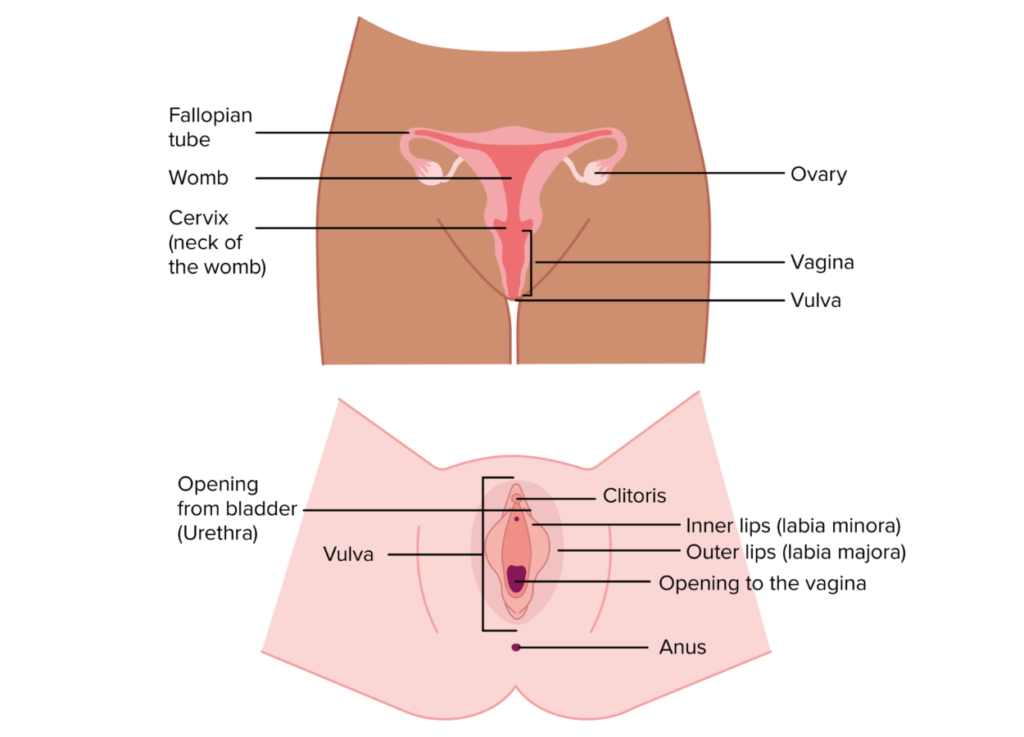
You may or may not have been taught about the gynaecological organs (female reproductive system) at home or at school, but it is never too late to learn about our bodies, and how we can look after our health.
The reproductive system
What is the womb?
The womb is a similar shape and size to an upside down pear. It is where a baby grows during a pregnancy. The cervix is at the bottom of the womb, and connects to the vagina. At the top it is connected to the ovaries by the fallopian tubes.
What is womb cancer?
Cancer of the womb may be called several different names by your healthcare professional including uterine cancer (the medical name for the womb is uterus), or endometrial cancer which is a cancer of the lining of the womb.
Womb cancer is the fourth most common cancer in women in the UK and the most common of the five gynaecological cancers, with over 9,700 people diagnosed every year in the UK. It’s on the rise, in the UK the number of people being diagnosed has increased by 12% in the last 10 years.
Key womb cancer statistics
4th
Most common cancer in women in the UK
9,700
people diagnosed a year in the UK
12%
more cases of womb cancer than 10 years ago.
How does womb cancer develop?
Most womb cancers begin in the womb lining (called the endometrium). The womb lining sheds each month during a period.
Womb cancer can affect anyone with a womb at any age. It is more common after the menopause, when your periods have stopped for 12 months or more.
What are the symptoms of womb cancer?
The most common symptom of womb cancer is abnormal vaginal bleeding:
- Bleeding after the menopause, like blood in discharge (pink, brown, red)
- Bleeding between periods
- Bleeding that is unusually heavy for you
- Vaginal discharge that is blood-stained.
Any post-menopausal bleed is abnormal. It is important to get any new bleeding checked by your GP. It is more likely to be caused by something less serious than cancer, but it is always worth getting checked. Just in case. The earlier womb cancer is caught, the best possible chance you will have of successful treatment.
For peri and post-menopausal women and people with gynae organs it can take a while to know the new ‘normal’ for your vaginal discharge. If you aren’t sure, do speak to your GP or practice nurse. You can also contact our Ask Eve nurses for free and confidential information.
What are the risk factors of womb cancer?
There are many different types of womb cancer. Most happen with no clear reason. But we know that too much oestrogen (a type of hormone) can raise your risk.
Fat cells in the body store oestrogen, even after the menopause. Obesity has been linked to womb cancer more than any other cancer, this is because of its effect on oestrogen levels. It’s not always possible to prevent womb cancer, but some things are thought to reduce your risk, like maintaining a healthy weight.
A small number of womb cancers are linked to a gene alteration called Lynch syndrome. If you have womb, bowel and/or ovarian cancer in your family, there is a chance this could be from Lynch syndrome.
Guide to Lynch syndrome
If you have womb, bowel and/or ovarian cancer in your family, there is a chance this could be from Lynch syndrome.
Other risks are increasing age, oestrogen only HRT, tamoxifen (a treatment for breast cancer), diabetes and polycystic ovaries (PCOS).
How is womb cancer diagnosed?
You should visit your GP if you have abnormal vaginal bleeding. Even though it’s probably something less serious than cancer, it’s best to be sure. It’s important to get any symptoms checked whether or not you have had a clear cervical screening test. Cervical screening is a test to help prevent cervical cancer. It does not prevent or detect any of the other four gynae cancers.
Your GP will probably check your pelvic area, between your hip bones and the lower part of your tummy. This is called a physical examination. They will ask about your symptoms, when they happen, and how often. It is helpful to take a diary of your symptoms. When you bleed, how heavily, for how long, and any other symptoms like pain. This will help give the doctor as much information as possible.
You may be referred for more tests like a transvaginal ultrasound and a biopsy, when they take a sample of tissue from your body. These will be at either a hospital or a one-stop clinic.
Transvaginal ultrasound – This is a type of ultrasound scan inside the body. A small scanner is put into the vagina to see the inside of the womb. This may feel a little uncomfortable, but it shouldn’t be painful. It may be more difficult if you haven’t had penetrative sex or if you have a vaginal or vulval health problem like vaginismus. If you’re in pain or worried, do tell the doctor.
The ultrasound will check for any changes to the thickness of the lining of your womb that could be caused by cancer and or any other problems.
Biopsy – If the scan shows changes in the thickness of the lining of the womb (often above 4.5 mm), you will have a tissue sample taken from the body, called a biopsy. This will be tested to see what is causing the problem. It will be done in an outpatient department or under general anaesthetic. The biopsy is taken with a hysteroscope, which is a narrow telescope with a light and small camera at the end. It is placed into the vagina, passed through the cervix and into the womb. The doctor or nurse can see the inside of your womb on the screen. Sometimes the sample is taken with a fine tube called a pipelle. Taking painkillers like paracetamol and ibruprofen before the appointment can help make you more comfortable.
If you find it too painful, speak to your doctor or nurse about having it done under general anaesthetic.
Staging and grading womb cancer
These tests will enable your doctors to find out if you have womb cancer, which specific type of womb cancer you have, and its stage and grade. All of this information will help your doctors work out the best treatment options for you.
The staging of cancer looks at how big the cancer is and whether it has spread.
The grading of cancer looks at the type of cancer cells you have and how they act, and whether they multiply quickly or slowly.
Womb cancer stages:
- Stage 1 – early stage, where the cancer is still inside the womb
- Stage 2 – the cancer has grown into the cervix, but not outside of the womb
- Stage 3 – the cancer has spread outside of the womb into other areas inside your pelvis
- Stage 4 – the cancer has spread outside of your womb to other areas of the body outside of your pelvis.
Womb cancer grades:
- Grade 1 – slow growing, the cells look quite similar to ‘normal’ cells. This may also be called low grade or well differentiated
- Grade 2 – cells grow faster than grade 1. This may be called moderate grade or moderately differentiated
- Grade 3 – cells grow faster and are more likely to spread. This may be called high grade or poorly differentiated.
What are the treatments for womb cancer?
- Surgery – The most common treatment for womb cancer is surgery. The womb, ovaries, fallopian tubes and cervix are removed. This surgery is called a total hysterectomy and bi-lateral salpingo-oophorectomy. After this surgery, you will no longer be able to get pregnant. It will also put you into a surgical menopause if you haven’t already gone through the menopause naturally. If your cancer is found early, you may only need surgery. After the surgery, the tissues removed will be sent off for testing to see if you need any more treatment. Your clinical team will discuss any decisions and plans with you.
- Brachytherapy – Some women and people with womb cancer are also treated with brachytherapy. This is where a small radioactive device is put into the vagina to give internal radiotherapy.
- Radiotherapy – Depending on the stage of cancer, some people may have external beam radiotherapy. This is where a machine beams high-energy rays at your pelvis from outside your body.
- Chemotherapy – Chemotherapy is used with advanced stages, high risk or recurrent womb cancers. It may be given with new treatments like immunotherapies which use the immune system to kill cancer cells.
- Hormone treatment – Hormone treatment is sometimes used in younger women who want to have a family, or for people with more advanced disease.
- Targeted therapies – Sometimes you may be offered a type of targeted therapy, to slow down or stop the growth of cancer cells. This will depend on the type and stage of cancer you have and how well your cancer has responded to chemotherapy.
Life with/after womb cancer
Living with and beyond womb cancer can affect many areas of your life. Everyone is different, but some people have lots of different emotions. You may have effects from treatment that start months or even years later. Dealing with the loss of fertility can be very difficult. It is important that you get the help, support and information you need. You can contact our Ask Eve nurses to chat about any worries or questions.
More information
We have lots more information and tips on gynae cancers. You can also speak to our Ask Eve nurses for free to chat about any worries or questions.





Our health information meets PIF TICK quality mark.
The PIF TICK is a seal of approval from the Patient Information Forum. It helps you know if health information is trusted, evidence-based and accessible.
To be PIF TICK approved, health information creators must prove they meet 10 key criteria and undergo a robust, independent annual assessment.
Information updated: April 2026. Next review due: November 2027
Real stories

Jackie’s story
Jackie was diagnosed with womb cancer after some heavy bleeding. She shares her story to empower women to go to the doctors if they notice anything unusual.

Mandy’s story
Mandy shares her story of how her mum’s advice got her to the doctors and diagnosed early with womb cancer.

Gemma’s story
Gemma reflects on how tracking her periods helped her monitor changes and get help.

Celeste’s story
Celeste shares her experience of getting diagnosed with a rare womb cancer and highlights the importance of knowing your normal.
Fay’s story
Fay shares her story of getting diagnosed with stage 3 womb cancer, and how her diagnosis led her to start campaigning for gynae cancer awareness.